Sale!

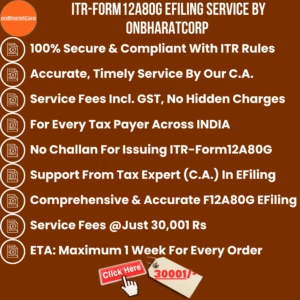
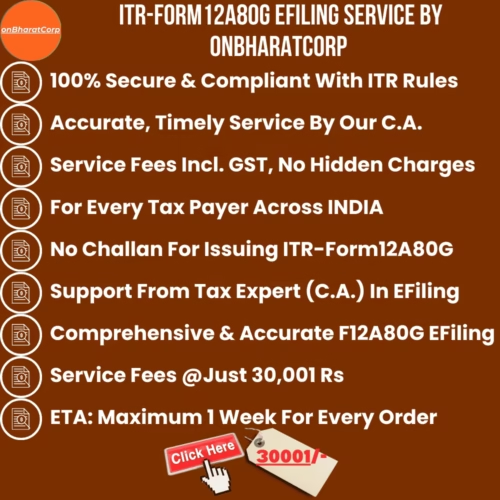
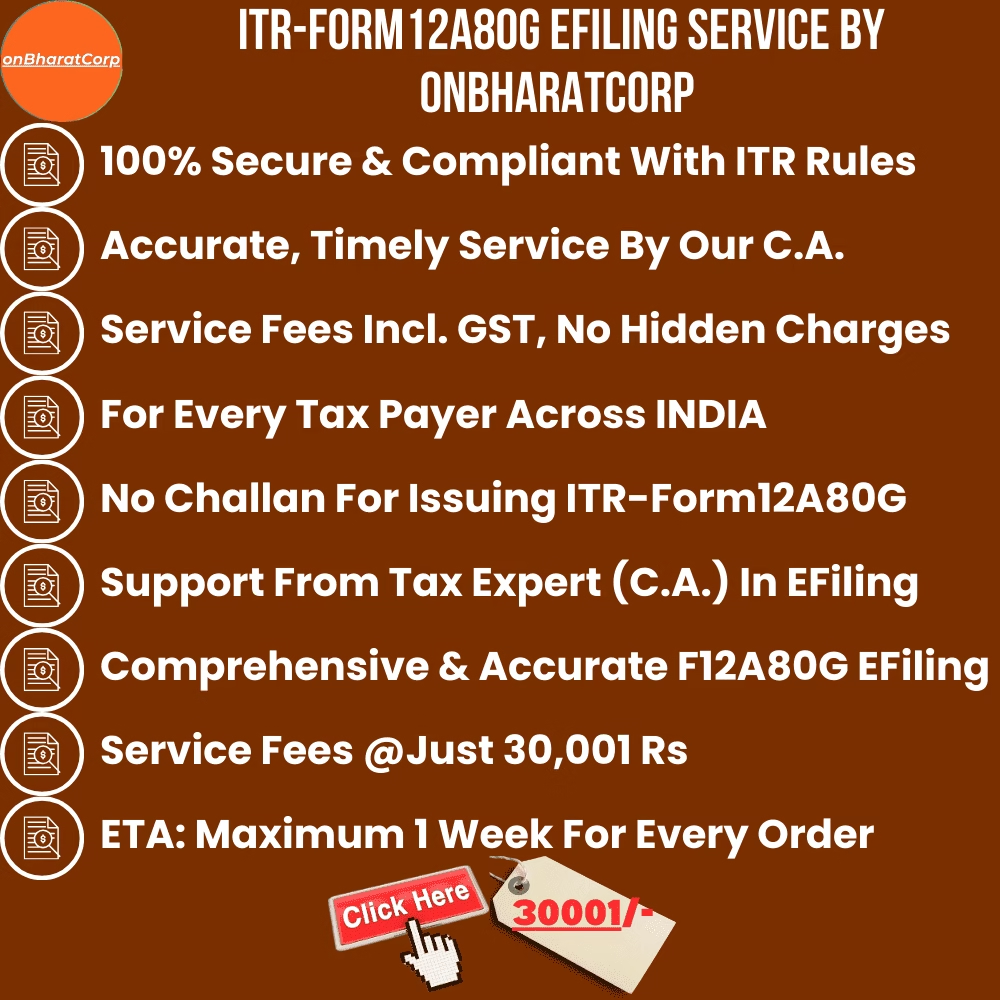
101938-ITR-EFiling Form-12A80G Service Details

Original price was: ₹40,001.00.Current price is: ₹30,001.00.

- +

ITR-EFiling Form-12A80G Service


Guaranteed Safe Checkout
Form 12A plays a crucial role in the registration framework established by Section 12A of the Income Tax Act, 1961 in India. This registration is essential for non-profit entities, including charitable and religious trusts, societies, and Section 8 companies, as it allows them to enjoy tax exemptions on their income. By securing 12A registration, these organizations can ensure that their earnings are directed towards charitable or religious activities without incurring income tax liabilities, thereby maximizing their resources for their intended purposes.
To qualify for 12A registration, certain criteria must be met. Eligible entities include charitable trusts that focus on activities such as poverty alleviation, education, medical assistance, and other public utility objectives. Additionally, religious trusts that aim to promote religious practices, societies registered under the Societies Registration Act that engage in social welfare initiatives, and Section 8 companies formed under the Companies Act, 2013 with goals related to commerce, art, science, and social welfare are also eligible. However, it is important to highlight that private or family-owned trusts and charities do not meet the requirements for registration under Section 12A.
The advantages of obtaining 12A registration are significant. Firstly, organizations benefit from tax exemption on their income, provided it is utilized for charitable or religious purposes. Secondly, many governmental and international funding bodies mandate 12A registration as a condition for granting financial support, thus opening doors to potential funding opportunities. Lastly, having this registration enhances the credibility of the organization, fostering trust and confidence among donors and stakeholders, which is vital for sustaining and expanding their philanthropic efforts.


The procedure for acquiring 12A registration consists of several essential steps that must be meticulously followed. Initially, it is crucial to prepare a comprehensive set of documents. This includes obtaining a self-certified copy of the trust deed or the registration certificate, compiling the details of the trustees or members who constitute the governing body, and assembling the financial statements of the organization. Additionally, a detailed note outlining the activities undertaken by the organization should be included to provide context and clarity regarding its operations.
Once the necessary documentation is in order, the next step involves the submission of Form 10A. This form must be filed electronically through the Income Tax Department’s e-filing portal. It is imperative to ensure that all information provided in the application is accurate and complete, as this will facilitate a smoother review process. The online submission not only streamlines the application process but also allows for efficient tracking of the application status.
Following the submission of Form 10A, the application will undergo a thorough review by the Commissioner of Income Tax. This review process is critical, as it determines the eligibility of the organization for 12A registration. If the Commissioner is satisfied with the provided documentation and the organization’s compliance with the necessary criteria, a registration certificate will be issued, officially recognizing the organization’s status under the relevant tax provisions.
The validity and renewal process for 12A registration has undergone significant changes. Previously, organizations were granted 12A registration for an indefinite period. However, recent legislative amendments now mandate that this registration must be renewed periodically. The initial registration is valid for a duration of five years, and organizations are required to initiate the renewal process at least six months before the expiration of their current registration.
It is important to clarify the difference between Form 12A and Section 12A. Section 12A refers to a specific provision within the Income Tax Act that allows non-profit organizations to receive tax exemptions. In contrast, Form 12A was historically utilized for the application process for registration under Section 12A. Currently, organizations must use Form 10A to apply for this registration, reflecting the updated procedural requirements.
Obtaining 12A registration is vital for non-profit organizations in India, as it enables them to benefit from tax exemptions and enhances their overall credibility. By adhering to the established application procedures and compliance obligations, these organizations can ensure they remain within the legal framework, thereby continuing their essential contributions to societal welfare and development.
To qualify for the deductions outlined in Section 80G, several categories of taxpayers are eligible, including individuals, Hindu Undivided Families (HUFs), corporations, partnerships, and Non-Resident Indians (NRIs). It is crucial for potential donors to understand that only contributions made to specific funds and recognized institutions are eligible for these tax benefits. Furthermore, individuals who choose to adhere to the new tax regime under Section 115BAC will not be able to claim these deductions, which is an important consideration for tax planning.
In summary, Section 80G serves as a significant tool for encouraging charitable donations by providing tax relief to a wide range of contributors. By understanding the eligibility criteria and the limitations associated with the new tax regime, taxpayers can make informed decisions about their charitable contributions while maximizing their tax benefits. This provision not only supports the growth of the nonprofit sector but also fosters a culture of giving within the community.
Payment Methods for Deductions Under Section 80G To be eligible for deductions under Section 80G, it is essential to adhere to specific payment methods. Donations that exceed ₹2,000 must be made using non-cash options, which include cheques, demand drafts, or various digital payment platforms. While cash donations are permissible for amounts up to ₹2,000, any cash contributions that surpass this threshold will not qualify for tax deductions.
Deduction Categories and Their Limits The extent of the deduction available to donors is contingent upon the type of organization receiving the contribution. For instance, donations made to certain designated funds, such as the Prime Minister’s National Relief Fund, are eligible for a full 100% deduction without any qualifying limit. Conversely, contributions to specific charitable institutions allow for a 50% deduction without a qualifying cap, while donations to government-approved educational institutions can also receive a 100% deduction, albeit subject to certain qualifying limits.
Understanding Qualifying Limits It is important to note that the term “qualifying limit” is defined as 10% of the donor’s adjusted gross total income. This means that for certain donations, the deductible amount may be restricted based on this percentage of the donor’s income. Additionally, contributions to other specified institutions may only qualify for a 50% deduction, which is also subject to the same qualifying limit. Understanding these nuances is crucial for donors aiming to maximize their tax benefits while supporting charitable causes.
To claim the deduction effectively, it is essential to follow a few key steps. First, ensure that you obtain a stamped receipt from the organization receiving the donation. This receipt should clearly indicate the donor’s name, the amount donated, and the date of the transaction. Additionally, it is crucial to verify that the organization holds a valid 80G certificate, which confirms its eligibility to receive tax-deductible donations. When filing your Income Tax Return (ITR), you must include specific details such as the name, address, and Permanent Account Number (PAN) of the recipient organization, along with the amount donated.
Organizations that wish to obtain 80G certification must adhere to a structured application process. This begins with submitting an application to the Principal Commissioner or Commissioner of Income Tax (Exemptions) using the designated form. Along with the application, organizations are required to provide comprehensive documentation, including incorporation papers, registration certificates, financial statements, and a detailed account of their activities. The Income Tax Department may also conduct a physical inspection of the organization’s premises to ensure compliance with the necessary regulations.
The registration process includes the issuance of a provisional registration, which is initially valid for three years. Organizations must be proactive in renewing their registration, applying at least six months prior to the expiration of the provisional status or within six months of commencing their activities, whichever comes first. Subsequent renewals are granted for a period of five years. These procedures are designed to foster transparency and accountability within charitable organizations, ultimately enhancing the trust of donors and the effectiveness of charitable initiatives.

Reviews

There are no reviews yet.

Only logged in customers who have purchased this product may leave a review.

101938-ITR-EFiling Form-12A80G Service Details101938-ITR-EFiling Form-12A80G Service Details
Original price was: ₹40,001.00.Current price is: ₹30,001.00.
- +
Scroll to Top